






Features
Trucent’s enhanced corn oil separation offering has three prongs: new corn oil separation chemistry, improved mechanical separation solutions, and optimisation services
The story behind Trucent’s updated programme started with a basic question, says Jennifer Aurandt-Pilgrim, director of technical services. “Our clients were asking us, ‘Why does our corn oil performance change from day…
Read More »
Read More »
Lallemand offers a brief insight into the ever-changing world of industrial enzymes for alcohol production
What do enzymes do? Why do we need them? Enzymes can be defined as any of a group of complex proteins or conjugated proteins that are produced by living cells and act as catalysts in specific biochemical reactions. What exactly are enzymes? So enzymes, despite ‘doing things’ in our…
Read More »
Read More »
There’s really no escaping international politics in the US at present, especially for businesses whose domestic opportunities are softening and who had been looking towards customers in China as a good way to keep sales and prices moving in the right direction.
This is certainly the case for North America’s ethanol producers, who find themselves at the front line of US President…
Read More »
Read More »
Enerkem’s waste-to-biofuel technology chemically recycles carbon molecules in waste into added-value products
Imagine giving your living room a makeover using a bright new coat of paint – made from rubbish. Fiction? Not anymore. As countries around the world look for ways to transition from a linear economy – in which we take, make, use and dispose – to a circular economy…
Read More »
Read More »
What you need to know now about Low Carbon Fuel Standards verifications
Understanding the changes to California’s Low Carbon Fuel Standards (LCFS) verification process is important for all ethanol and biodiesel producers, even if you do not currently sell fuels in California. Several other regions around the world are in various stages of planning to incorporate carbon impact scoring into…
Read More »
Read More »
The EU is committed to carbon neutrality by the middle of the century, but long-term objectives require ambitious action today. The clean energy and climate package, including a set of legislations to ensure the EU is on track to reduce greenhouse gas (GHG) emissions by at least 40% by 2030, have now all been adopted. An important legislation is the Effort Sharing Regulation (ESR), which obliges…
Read More »
Read More »
With the entry into force of the revision of the renewable energy directive (REDII) in December 2018, following months of intense negotiations, the European Union (EU) biofuels industry at large entered a no less important phase in which Member States have to put in place the necessary national REDII implementing legislation ahead of the 31 June 2021 transposition deadline. The REDII gives plenty…
Read More »
Read More »
Biorefineries are indispensable for hitting zero CO2 emissions, writes Novozymes’ Thomas Schrøder
This article originally appears in the November/December issue of Biofuels International. Sign-up for a free copy here.
The world has been discussing climate change for years. In the meantime, global temperatures have continued to rise at an alarming pace. Scientists now say[1] the world…
Read More »
Read More »
California is becoming increasingly important for the biofuels industry. The state’s Low Carbon Fuel Standard (LCFS) is designed to encourage the use of cleaner, low carbon fuels. Biodiesel in particular stands to be a significant beneficiary, being one of the lowest cost compliance options for the standard. As a result, more and more producers are turning their attention to the Golden…
Read More »
Read More »
International Sustainability and Carbon Certification (ISCC) is a certification system dedicated to verifying fully traceable and deforestation free supply chains.
The system has been used widely in the biofuels sector to verify a range of feedstocks, from crops to waste. This has included UK producer Argent Energy, which produces biofuel from fats, oils and grease (FOG) waste.
Here, Biofuels…
Read More »
Read More »
A new guide from the Low Carbon Vehicle Partnership (LowCVP) for fleet operators shows how renewable fuels can immediately cut greenhouse gas emissions in road transport, particularly from commercial vehicles.
While the focus has been mainly on vehicle electrification for meeting the UK’s net zero target as it applies to road transport, there are still major technical challenges to be…
Read More »
Read More »
Gevo Inc., is a technology development and commercialisation company focused on largescale deployment of net-zero renewable hydrocarbon fuels, chemicals and nutritional products.
Using a combination of proprietary biological and chemical transformations and a strategic alliance with Axens, the company plans to offer the technological know-how and systems design for a wide range of products…
Read More »
Read More »
Ethanol leaders in the US are upbeat and determined concerning their industry’s achievements and potential.
This, despite, once again, having to petition the White House to secure summertime freedom of use for E15 while also working to gain greater public recognition of ethanol’s strength as a positive force in the drive towards net-zero.
The march towards November’s presidential election…
Read More »
Read More »
Aviation is facing one of the greatest challenges in its history: its decarbonisation. Against this backdrop, sustainable aviation fuel (SAF) is emerging as the most immediate and viable solution for reducing the sector's net emissions.
However, while the focus is often on SAF production, its take-off requires logistics infrastructure capable of connecting markets, scaling volumes and…
Read More »
Read More »

CONNECT WITH US




Latest Videos
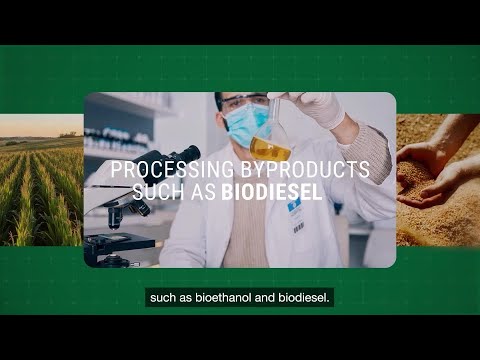
The Science That Keeps Biofuels Flowing
Maximise your lab prospects in biofuels development and testing. Unlock market and economic benefits through reduced production costs, high product quality, and compliance with global standards. Our solutions support multiple value chain production stages, from evaluating incoming raw materials to processing by products such as glycerin, to finished fuel such as bioethanol and biodiesel.
The Must Attend Event for 2026

Polls
 Loading ...