






Features

The US grain trade has continued supplying countries with much-needed commodities during the COVID-19 pandemic.
As many parts of the world are on the verge of reopening, the US Grains Council president and CEO Ryan LeGrand sat down with the National Association of Farm Broadcasting to discuss how the movement of grain has continued.
He explained trains are continuing to move north to Canada…
Read More »
Read More »
In this article, Hank A. Britain, director of optimisation and advanced control at OpX Control, reveals how the base control layer can be improved to reduce variability, and how many advanced process control (APC)-type functions can be done in the distributed control system (DCS), leading to improved control in ethanol plants.
Part I: Begin with the base layer
In a book published by the…
Read More »
Read More »
The aviation industry requires effective and sustainable solutions to meet its commitments – at national and international level – in a global effort to reduce the impacts of climate change.
With the implementation of CORSIA, the International Civil Aviation Organisation’s (ICAO) Carbon Offsetting and Reduction Scheme for International Aviation, over 85% of global aviation activity will…
Read More »
Read More »
Regulations driving mandatory blends of agricultural products into ground transport fuel makes for a heady cocktail of unintended consequences.
Despite the best laid plans of the European Union, companies have learned from the original Renewable Energy Directive (RED) throughout the 2010s, that there is a lot of room for things to go awry at the intersection of two huge and critical global…
Read More »
Read More »
The challenge of compiling an overview of the current state of the European biofuels industry is as close to impossible as it gets at present, let alone delivering any degree of business accuracy to an analysis of the sector’s immediate future.
As Covid-19 continues to sweep the world, the everyday reality for business leaders and politicians alike is that each new morning brings something…
Read More »
Read More »
Back in 1994, I was at Cargill when John Elkington introduced his triple bottom line (TBL) concept.
The TBL, as it came to be known, began to have an impact on my thinking almost immediately. Its ustainability framework encouraged businesses to measure not just economic impact, but also use a yardstick of equal importance on social and environmental scales.
Over time, it was adopted, and the…
Read More »
Read More »
Redcar-based Nova Pangaea Technologies converts unwanted plant biomass into natural platform chemicals and biofuels. We spoke to Sarah Ellerby, the company’s CEO
1. Can you introduce yourself to our readers and tell us a bit more about Nova Pangaea Technologies?
I was born and bred in Yorkshire and just returned to the area after 18 years in in the US. I’ve worked across broad industries as…
Read More »
Read More »
Sweden-based sustainable chemical and biofuels supplier Wibax AB has announced it is investing a total of SEK 15 million (€1.38 million) in two new terminals in the Port of Skellefteå, in the north of the country.
These are near Wibax's existing terminals in the area.
“Wibax continues to grow and with this investment, we want to further strengthen our presence in the…
Read More »
Read More »
A chemical company has announced it has started monthly production of 2 million litres of disinfectant at its facilities in Germany.
This disinfectant made by Clariant in Gendorf will then directly, or via repacking partners, be sent to regional hospitals and other vital institutions in Bavaria, who are currently facing limited availability of this critical product during the COVID-19…
Read More »
Read More »
A new study carried out by economic modelling experts from Purdue University in the US has found the impacts of US biofuel policy on deforestation in Malaysia and Indonesia to be ‘insignificant’.
The study, titled ‘US Biofuel Production and Policy Implications for Land Use Changes in Malaysia and Indonesia’, considered concerns from renewable fuel opponents claiming that biofuels are to…
Read More »
Read More »
Palm oil prices are expected to decrease slightly from its current levels over the next three to six months due to fall in demand caused by the Covid-19 pandemic.
“Although palm oil supply is also being negatively impacted by government containment measures as plantation operations are being disrupted which could support prices in the very near term, we believe demand destruction will be…
Read More »
Read More »
The agave plant used to make tequila could be used to make biofuels.
Found in the semi-arid Australia, the plant could become an environmentally friendly solution to Australia's transport fuel shortage as reported in the Journal for Cleaner Production.
A team of researchers at the University of Sydney, University of Exeter and University of Adelaide have been carrying out research into the…
Read More »
Read More »
The European Union’s (EU) new Green Deal, with its goal to reduce greenhouse gas (GHG) emissions to net-zero by 2050, has come to dominate policy discussions in Brussels.
If implemented, it would be one of the most ambitious endeavours in the EU’s 70-year history and amount to a revolution for the transport sector. Electrification will be a fundamental contributor, notably in the light-duty…
Read More »
Read More »
A new study carried out by economic modelling experts from Purdue University in the US has found the impacts of US biofuel policy on deforestation in Malaysia and Indonesia to be ‘insignificant’.
The study, titled ‘US Biofuel Production and Policy Implications for Land Use Changes in Malaysia and Indonesia’, considered concerns from renewable fuel opponents claiming that biofuels are…
Read More »
Read More »
In light of today’s concerns about climate change and generating clean energy, there has been increased discussion involving alternative fuels such as biodiesel. Biodiesel, which is derived mainly from vegetable oils and animal fats, is taking the stage as a popular candidate for replacing petroleum diesel for a variety of well-supported reasons.
Perhaps the most convincing reason is that…
Read More »
Read More »
This year is going to be a massive 12 months for biofuels in Brazil, with the launch on Christmas Eve 2019 of the government backed RenovaBio carbon credit programme, the country’s ambitious national biofuels policy, which has been in the making since December 2016, writes Colin Ley.
Following three years of heated debate concerning what impact the new policy will have on the development of…
Read More »
Read More »
As we enter a new decade, the world’s energy sector stands at a crossroads in its efforts to improve the sustainability of its supply. The case for greener, cleaner alternatives to fossil fuels was made many years ago, but the growing calls for significant action on climate change have pushed this issue to the forefront of the industry’s strategy for 2020 and beyond.
The increased focus on…
Read More »
Read More »
Discovering the world, working with people across the globe, commuting to work every day or consuming exotic fruits imported to Europe – nearly every European is used to at least one of these habits producing a significant amount of carbon emissions. On the road to decarbonising transport and reaching climate targets, the market uptake of renewable fuels is essential.
The European transport…
Read More »
Read More »
By Raj Shah, David Forester, Philip Iaccarino and Kareem Mehdi
Bioenergy and biofuels are of increasing public and private interest as the world stands at a crossroads of rising energy demand and concerns over climate change. Biofuels are under an ever-brightening spotlight and touted as an ostensibly “cleaner” alternative to fossil fuels. However, in order to glean more than a simple…
Read More »
Read More »

CONNECT WITH US




Latest Videos
The Science That Keeps Biofuels Flowing
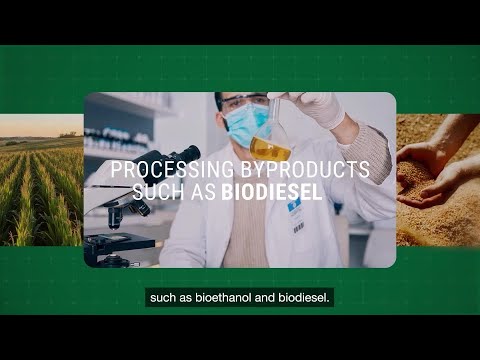
Maximise your lab prospects in biofuels development and testing. Unlock market and economic benefits through reduced production costs, high product quality, and compliance with global standards. Our solutions support multiple value chain production stages, from evaluating incoming raw materials to processing by products such as glycerin, to finished fuel such as bioethanol and biodiesel.
The Must Attend Event for 2026

Polls
 Loading ...