






← Go Back
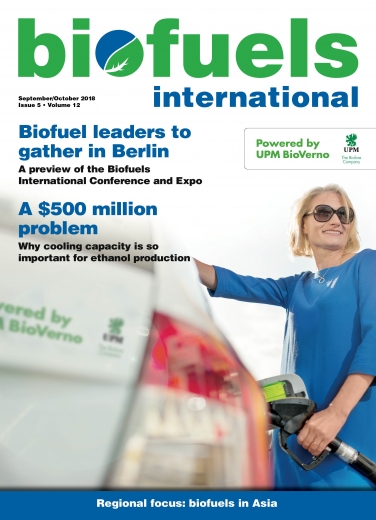
Volume 12, Issue 5
Focus on US Biodiesel
Feature
Biodiesel goes high tech to target energy and environment influencers, by Kaleb Little, director of Communications at the National Biodiesel Board.
Focus on US Ethanol
Feature
A sleeping giant for US ethanol exports? By Craig Willis, senior vice president of Global Markets at Growth Energy
Focus on European Ethanol
Feature
A long-term vision needs immediate results. How the EU can get a head-start on its emissions reduction roadmap, by Emmanuel Desplechin, secretary general of ePURE.
Harsh realities - US biodiesel market analysis
Feature
When considering profitability, it's been a good year so far for US biodiesel producers able to beneift from plunging feedstock costs and a revved up US economy with strong growth in manufacturing and freight hauling. From a policy perspective, curious is a kind word in explaining whipshaw regulatory directives that have drawn the ire of a wide array of affected parties and legilsators, but also...
[read more]
Supply and demand
Feature
June's late-night RED II deliberations have set the framework for a not-so-gradual shift from crop-based biofuels to wastes and technologically advanced fuels in Europe. Where politicians have led, the market has been quick to follow, with European demand ripples already washing up on shores on the far side of Eurasia.
A region on the rise?
Feature
The rising status of biofuels across Asia is encouraging for producers around the world who view the region as a prime market for expanded consumption, driven forward by the desire by many countries to reduce air pollution and lower their dependence on imported crude oil. Impressively high blending mandates in Indonesia, alongside continued biofuel policy initiatives in China, India, Japan and...
[read more]
E10 in the UK
Feature
A few weeks ago the UK’s Department for Transport (DfT) issued a call for evidence on the potential introduction of E10 and the issue of ‘consumer protection’ for those cars deemed ‘incompatible’ with this fuel. Sadly, it represents yet another example of the Government kicking the can further down the lane, refusing to take timely and necessary decisions whilst...
[read more]
Hitting the standards
Feature
Argent Energy is the UK’s ‘leading’ supplier of biodiesel, taking waste fats – such as used cooking oils, tallow and sewer grease – and turning them into high quality biofuel for the freight and transport industries. Despite the huge inherent variability in the starting materials, the company must reliably and consistently meet strict quality standards relating to...
[read more]
A $500 million problem flying under the radar
Feature
Ethanol production in the United States has increased steadily over the last five years as plants have invested in new equipment and technologies. However, in four out of the last five summers, this steady uptrend has been briefly interrupted (see Figure 1). Each summer the average set-back from the overarching trend is a production loss of 250 million gallons of ethanol. Considering current...
[read more]
Keeping out the cold air
Feature
Kiln and dryer seals are among themost importantcomponentsof an efficient bulk material manufacturing or drying process. Cold air infiltration into the dryer area not only drives up energy costs, but can: • Reduce kiln capacity • Reduce product quality • Reduce baghouse and cyclone efficiency • Increase ID fan demand • Contribute to ductwork clogging caused by damp...
[read more]
Getting the most from DDG's
Feature
Rayeman Elements has long been involved in developing technology and equipment for bulk densifying dried distiller’s grains (DDGs) alongside a range of other materials ‘from feed to bioenergy to fuel’. Now, the company is branching out into the drying sector, and has recently secured a major order of production dryer units with ethanol producer Marquis Energy. Here, Biofuels...
[read more]
Biodiesel Flow Improver (BDFI) technology
Feature
It is widely known tha tbiodiesel properties are entwined with the origin of their fatty acids, which are trans-esterified to produce Fatty Acid Methyl Esters(FAMEs). The composition of FAMEs produced from a variety of feedstocks (e.g. rapeseed, soybean, sunflower, palm oils, tallow -animal fat or used kitchen oil) can indicate the cold-flow and oxidative properties of the final product. As a...
[read more]






 Loading ...